Jesus - His Death on the Cross
Introduction
The Objective
The objective of this study is to build upon the previous talk, and to show that Jesus did not come only as the greatest Healer or Teacher. His death and subsequent resurrection are crucial to a basic understanding of the Christian faith.
Homework Review
Members were asked to read Mark chapters 1-5. Ask if they have any queries arising out of this, or any other questions about some aspect of the Christian faith that the passage raises. Allow some time for the discussion on the passages from Mark. This can often account for half the time spent together. If lots of other questions are raised, write them down, and deal with them one by one, even putting some off until future sessions, so that they can be dealt with adequately.
First Study Review
Give a two minute review of the first study, 'Jesus - Son of God' to refresh people's memories.
1. The Facts and Meaning of the Cross Mark 15:21-39
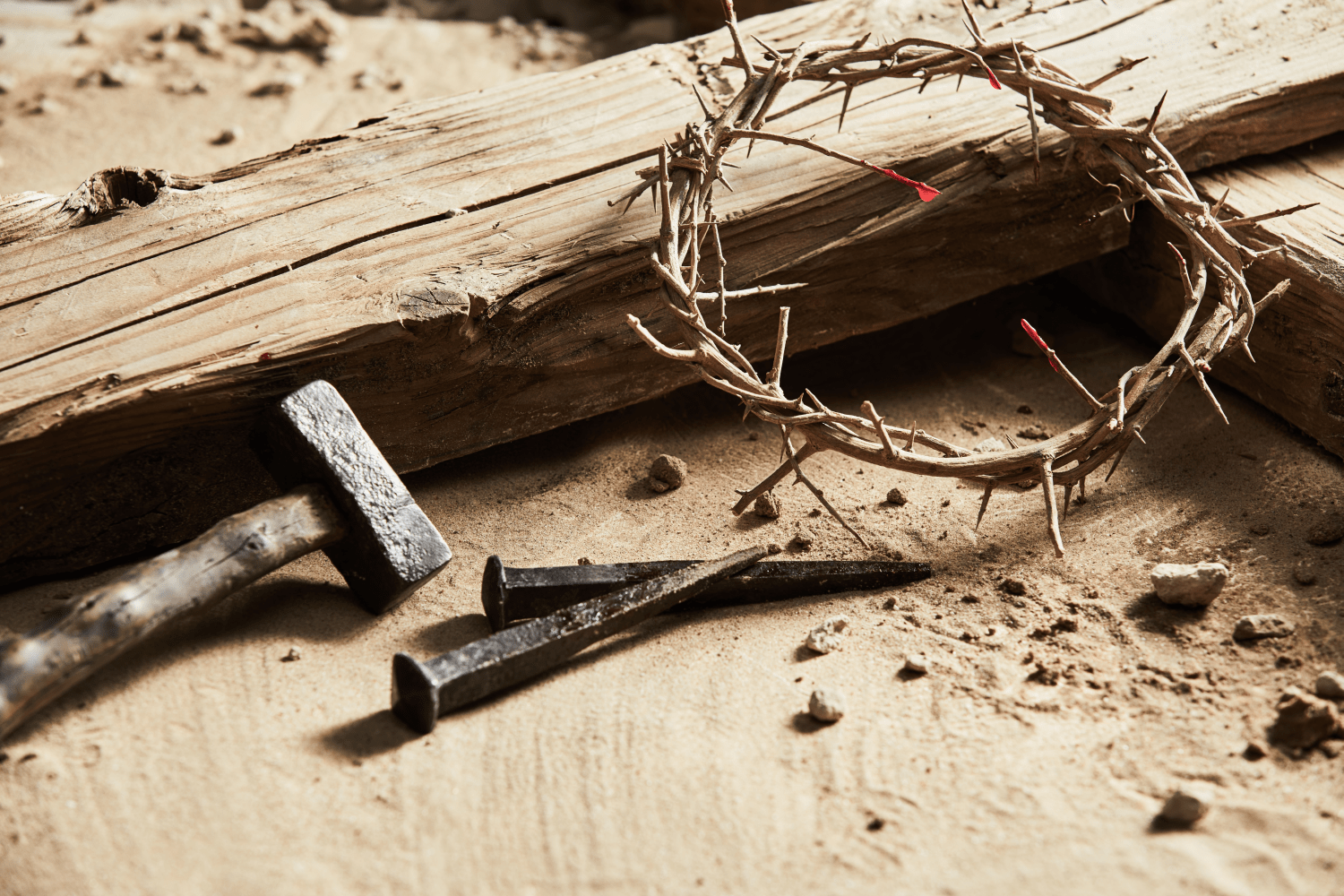
Explain that the cross is recognised as the central fact of Christianity. The cross has become the symbol of the Christian Church. But what actually happened during the six hours in which Jesus was on the cross?
2. The Darkness (15:33)
Indicates that, in the death of Jesus, God was doing a special, supernatural act. It could not have been an eclipse as it was full moon at Passover.
3. The Cry (15:34-37)
Some people feel that this cry, 'Why have you forsaken me?' expressed some loss of faith by Jesus in his heavenly Father. But we must face the reality of this cry, that at least to some extent God had forsaken Jesus on the cross. Explain the concept of substitution using The Book Illustration. Explain that Jesus took both our guilt and our punishment (that is, God's wrath) totally in his body on the cross. Add the comment that the resurrection demonstrated God's satisfaction with the work Jesus had completed on the cross.
4. The Curtain (15:38)
Describe briefly the layout of the Temple, a smaller and a larger room separated by the curtain, which symbolised the sin which separates mankind and God. The smaller symbolised the dwelling place of God, the larger was for the priests as representatives of the people. Explain the concept of reconciliation in the tearing of the curtain. The good news is that God and people are restored to friendship.
5. The Ransom (10:45)
Explain the concept of ransom. This is the payment of a valuable price to buy back a lost person or thing. We can think of examples of ransom-payments in the release of soldiers captured in battle, the release of slaves and the redeeming of possessions in a pawn shop.
Use the terms 'substitution', 'reconciliation' and 'ransom' only if you feel that they can be understood.
Summary
Jesus' death is sufficient for the sins of any person. However, God's forgiveness is not automatically conferred on everyone. If a person does not accept what Jesus has done, he or she is virtually saying to God, 'I don't want anyone to bear my sins - I'll bear them myself.' And so they will, on the last day. We must individually accept by faith the Jesus of the cross. Can you say, from the heart, as the Roman soldier did: "This man was really the Son of God!" (Mark 15:39).
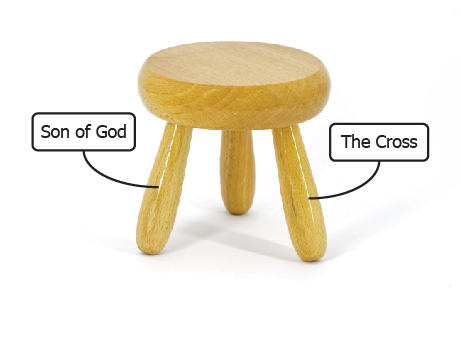
There are three concepts which you must believe to be a Christian. The first is Jesus the Son of God, the second is The Cross